How to Add Highlights to Art Digital Clip Studio Paint
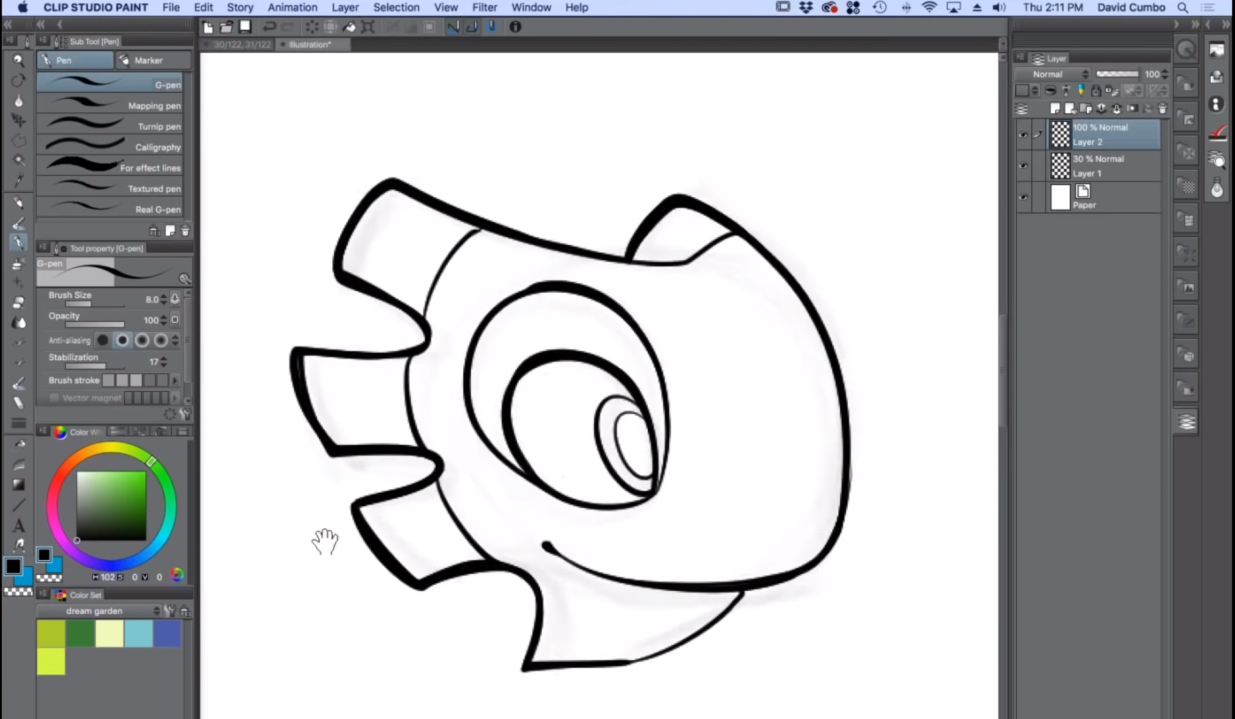
For this tutorial, I'grand going to demonstrate how to use Clip Studio Paint's Anti-overflow and Surface area Scaling functions. To do this, I volition utilise the linework below of the character Yooka from my full-color graphic novel Yooka-Laylee and the Kracklestone based on the video game Yooka-Laylee.
1. Coloring Flats
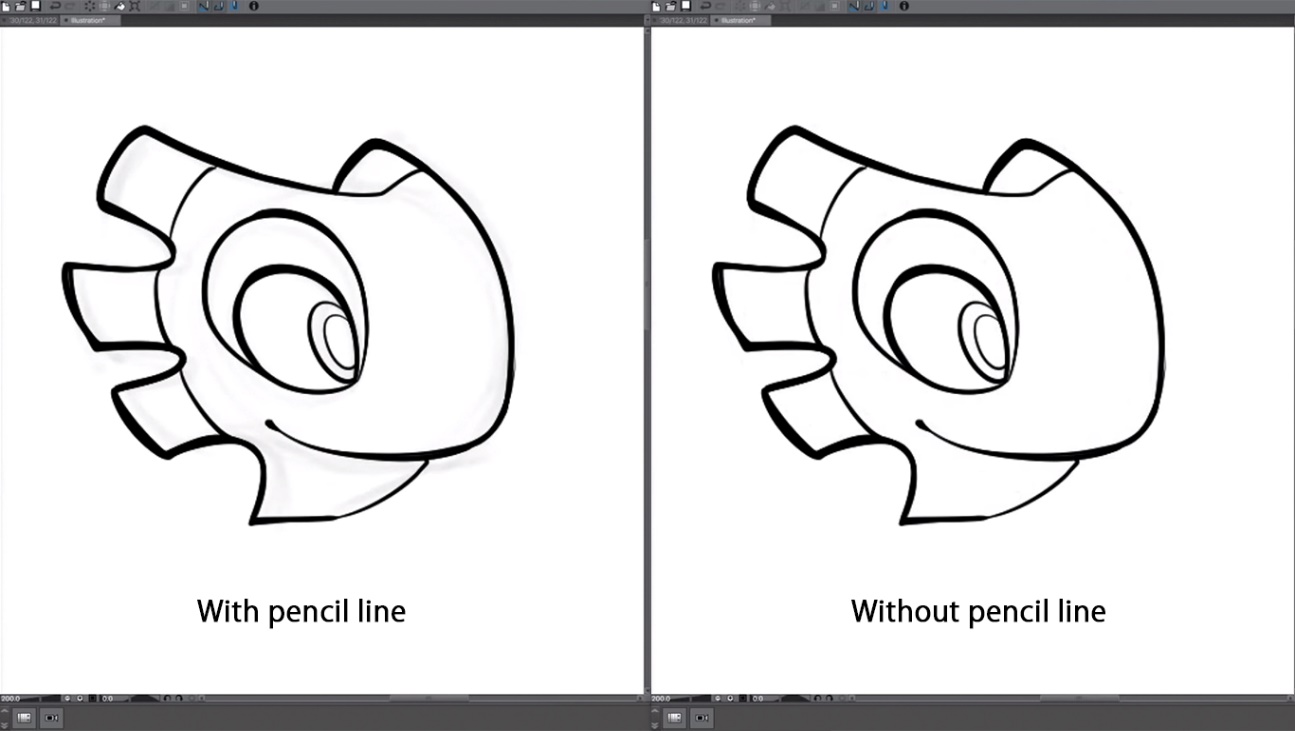
I'll start by cleaning up the sheet and getting rid of the pencil lines on the layer underneath the linework. Then, I'll make a new layer over top of the linework layer for coloring.
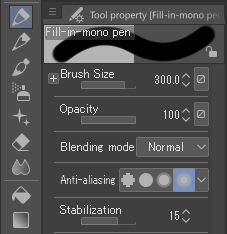
Next, I switch over to Marking located under the Pen sub tool palette and select the Fill up-in mono pen tool choice equally shown in the prototype below. Personally, I go along this pen anti-aliased when I depict. I don't worry nigh aliasing because I create full-color comics, so it's non terribly important for me.
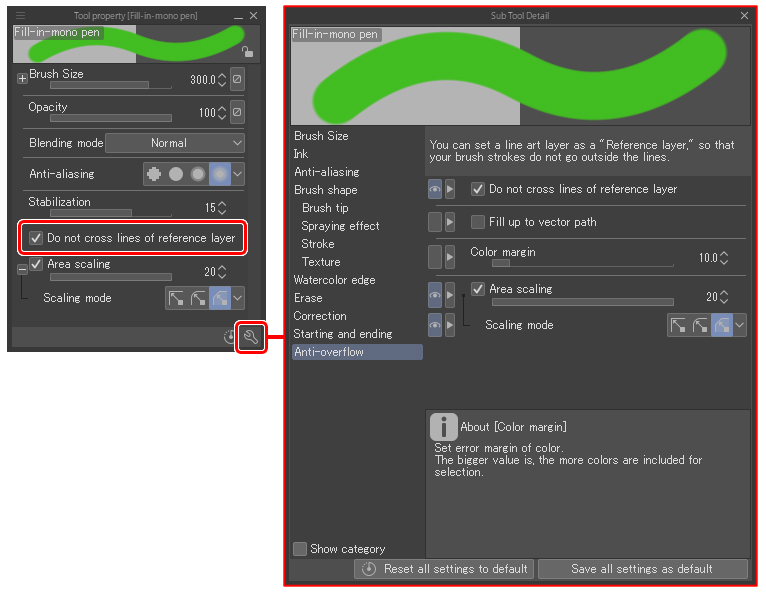
Next, with my colors roughly selected for my line art of Yooka, I will get over how to take advantage of Prune Studio Paint's anti-overflow feature. First, we will need to scroll further down the tool's property palette of the Fill up-in-mono pen tool located on the left side of the screen and select the "Do non exceed line of reference layer" selection located but nether "Stabilization." Checking the box adjacent to it turns information technology on. Additionally, clicking the small wrench icon in the lesser right corner of the tool's property palette will open the Sub tool detail window. In this window, we can discover the same "Do not exceed line of reference layer" selection under "Anti-overflow" which is located at the lesser of the left side of the list.
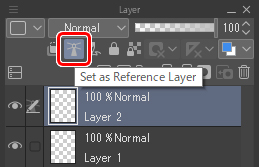
Once I take confirmed that it'south turned on, I'm going to select the linework layer from the layer palette. With it selected, I will then click the lighthouse icon on the upper part of the layer palette. This is the "Gear up as reference layer" icon. When I click this icon, the selected linework layer becomes a reference layer that the color layer will refer to as I block in the color.
Side by side, I will utilise the marker tool to color in the head. We can see that the colour volition now not exceed the linework even if my cursor paints past it.
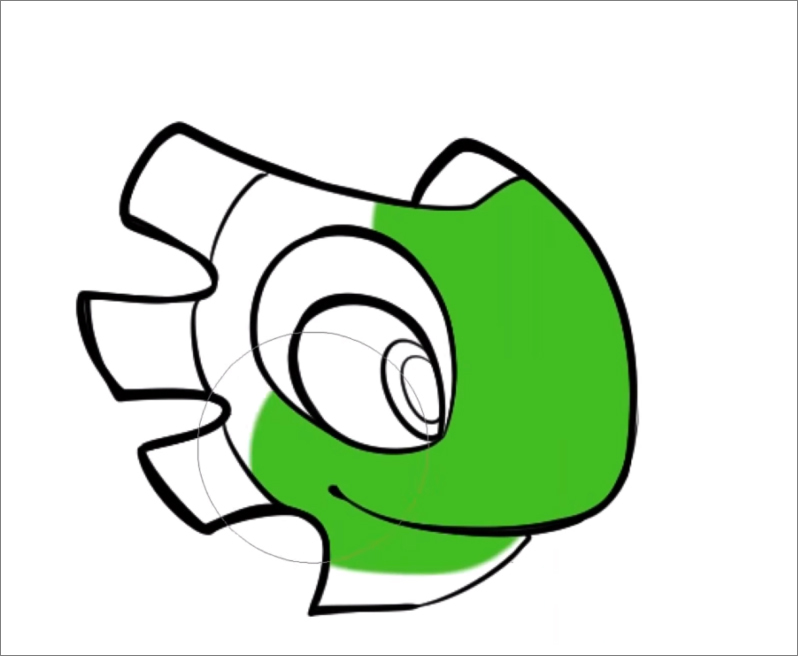
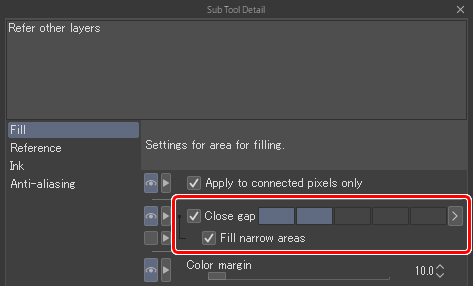
Nosotros could employ the paint bucket tool here as well to fill in the colour, simply I use the marker instead. Sometimes line work will have gaps that are a little flake bigger than the pigment saucepan tool's Shut gap feature can adjust. As a result, I don't rely on it likewise much considering often when I work with line fine art, I only want to colour a portion of it and not a whole enclosed area. For instance, maybe I just desire to colour half of his head green and then use a different colour on the other side. Using the marker allows more control and flexibility to color the same area with multiple colors every bit I get, while still limiting the color to within the line art.
*The Close gap feature is located in the Paint bucket sub tool particular palette nether Fill.
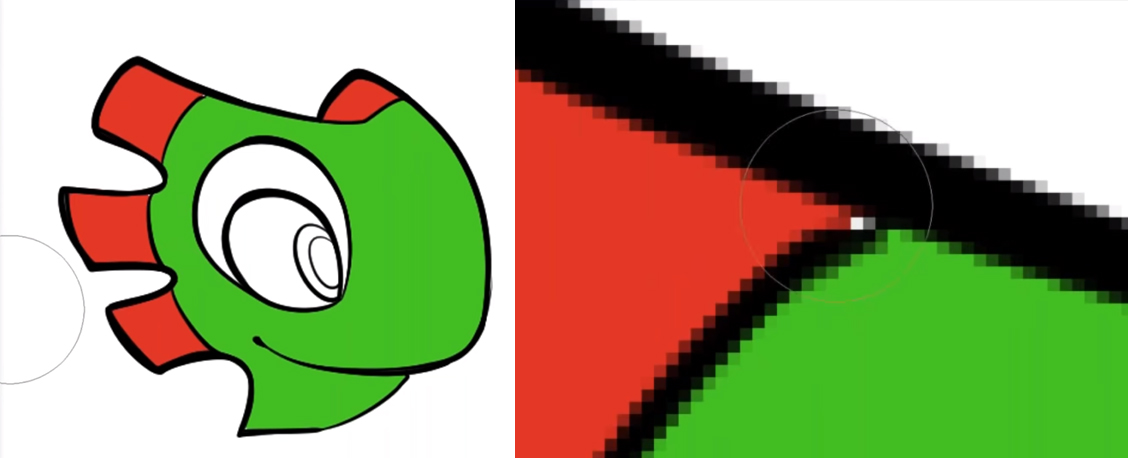
With Yooka's confront color consummate, let's motion onto his crest color. I color them using the same method as before. You can run across in the images below that there is a little bit of white coming through at the corners of the line work here and there. In this case, we can only switch over to the Pen tool and color those areas in.
Another feature I would similar to encompass is the Area scaling feature, which tin can be establish in the sub tool settings. When using this feature, you can scale up the area you are coloring so that you are too coloring underneath the line art.
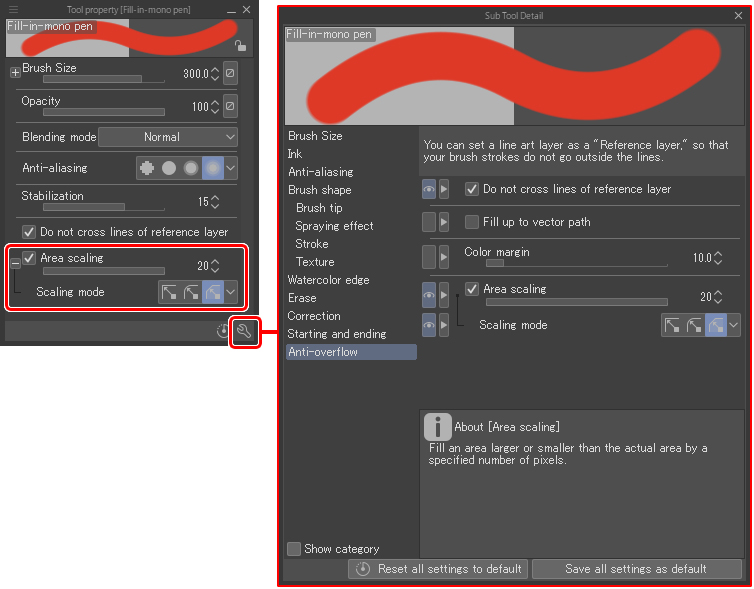
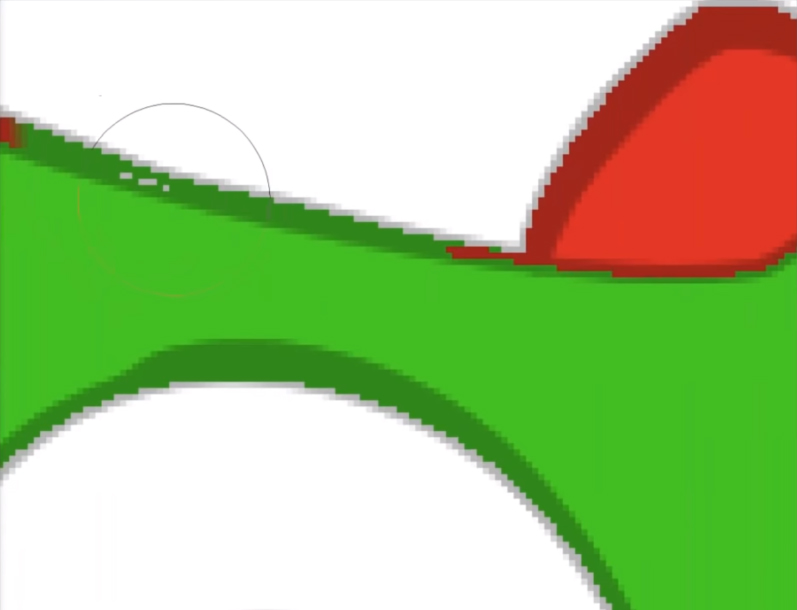
Here, I accept the Area scaling gear up all the way upward to 20. If I hide the line art layer, I can see that the color is indeed going all the style up across, but within, the boundaries of the line itself. In the epitome below, I take lowered the opacity of the line work. The grayed-out area shows the edges of the line, and then you tin encounter how far the dark-green goes under it.
Adjacent, I want to show you what happens when nosotros don't utilize that characteristic. I volition brand a new layer and fill up in the crests again.
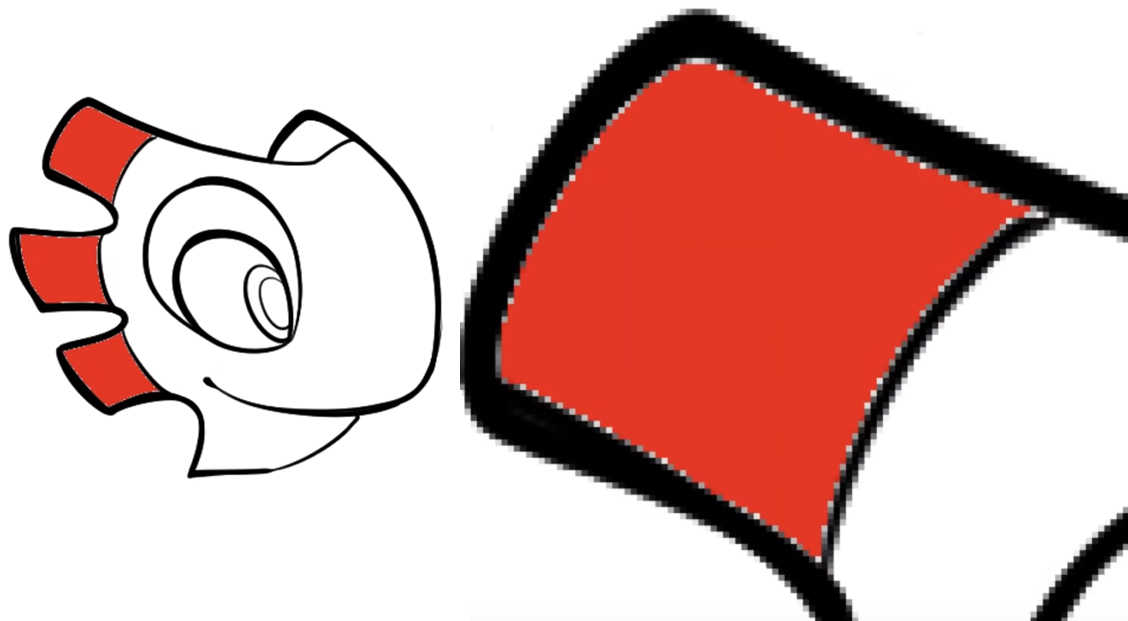
Do y'all detect in the image in a higher place, there is a white ghosting edge around the line work? This is a really big problem for press. Sometimes the plates get a little outset, so using Area scaling takes care of that potential printing issue.
After calculation the flat colors, I move on to shading. A technique I find especially helpful is to adjust the maximum size of the brush itself while you paint. For example, when shading around the optics, I'll shrink the size downwards of the brush to fit in the hard to reach areas.
Note: The default brush size adjustment shortcuts are the left and right brackets ("[" and "]".)
2. Bounced Calorie-free
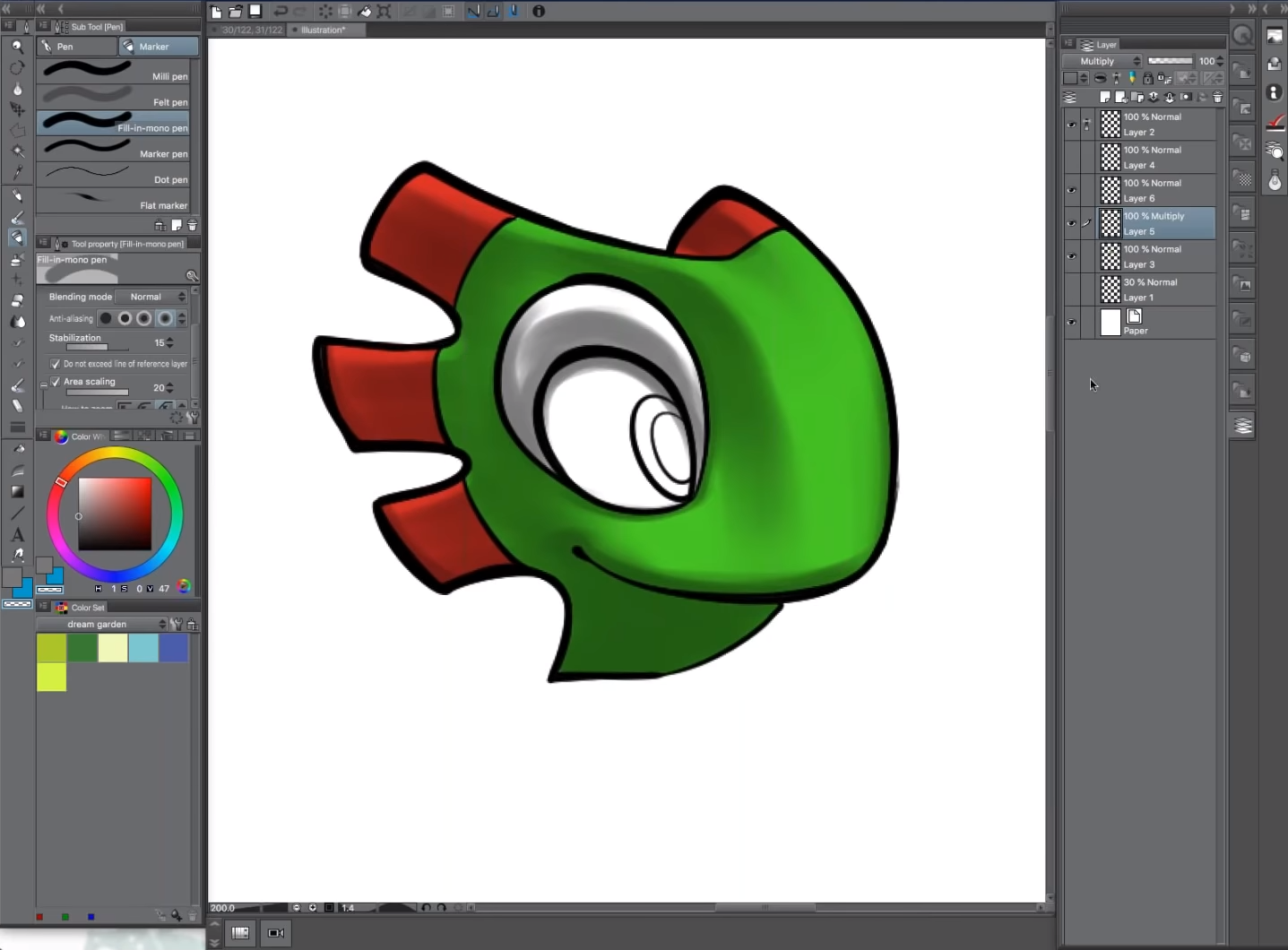
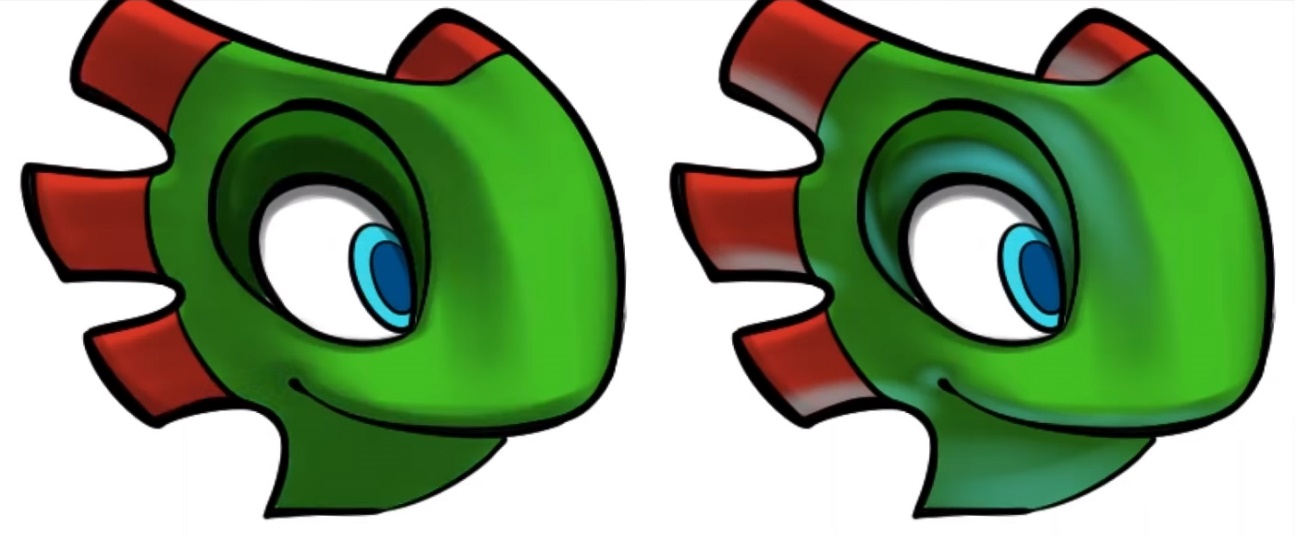
Next, I'll show how I exercise bounced light. Let's imagine that this is a sunny scene, maybe he'due south standing over a puddle of h2o that's reflecting a bright blueish light dorsum upwardly to him. Creating a new layer in a higher place the shading layer ("Layer 6" below) with the Blending mode set to Screen and changing the color to aquamarine, I starting time painting the underside of the character.
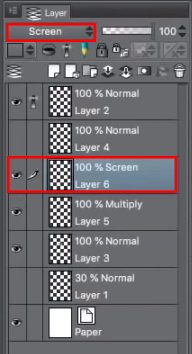
Because the layer is set to Screen and is placed over the shade layer fix to Multiply, the brush color is added to the shading. While painting, I think virtually light that's shining upwards. This is basically what bounced light is. You can come across this hands too: if yous were to enter a very brightly lit room or a sunny day and hold your hand over something, yous'd see some lite reflected from the ground on your palm. I like to exaggerate bounced light a little, to go as much every bit an effect as I can while also creating a very realistic environmental illumination.
3. Ambience Occlusion
Ambience apoplexy is a CG term and commonly doesn't apply to traditional fine art. However, it is applicable when working in 3D space, and is an extremely cool issue if done correct. The idea of ambience occlusion is that there'south a deeper shadow where objects are close together. Imagine the corner of a room; the corner of the room will exist darker compared to the rest of the room, as if light tin't actually get into the scissure as tightly as it could otherwise. Often, I'll do this on a multiply layer, adding in shadows that go over the line art to intersections, which add just a little more than realism to the piece. Even if it's using cartoony shapes, it'southward good to increase the realism considering yous won't have to limit yourself to the flat effects that y'all get with traditional comic shading. Just past adding ambient occlusion, you tin add together hints of realism to the coloring.
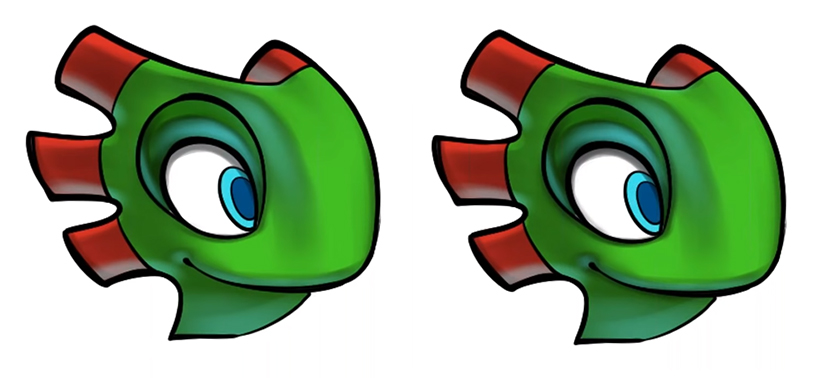
Above: You tin see additional shading, or ambient occlusion, in the right prototype effectually the corners of the eyes, the rima oris, and along the centre socket.
Creating a screen layer, I'll pigment the highlights with a harder brush with low density. Painting the opposite of a bounce lite; that is, painting highlights where sunlight will hitting, I suit the size of the brush to create difficult, sharper lines.
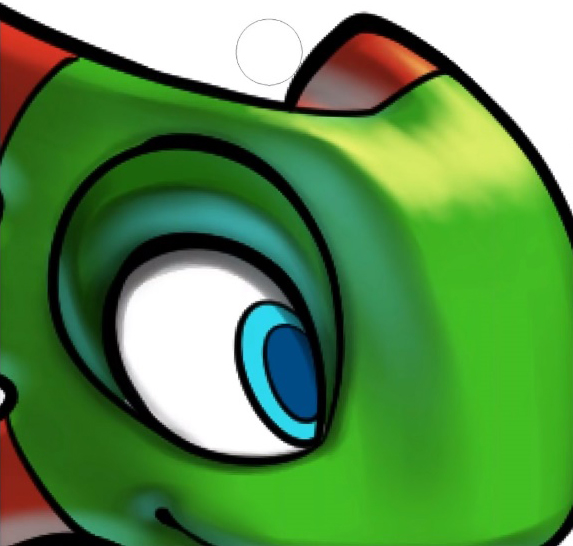
With these lines we can indicate texture, as the texture of the eyeball should be different from his pare. Similarly, we can add harsh highlights to the peel below his heart to make information technology shinier, indicating perspiration.
Finally, I'll add color to the lines. If you look in the layer palette, you lot'll run across an option called Lock transparent pixels. If I click on that pick, any painting applied to the layer will be limited to the line itself.
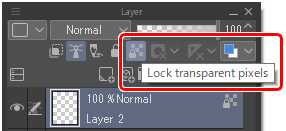
Start, I'll select a color that'due south like the main fill color. I'll than darken that color and become over the whole layer with a large pen brush to utilise the color evenly and create a base color. Later that, I'll go into individual sections and color the lines to match the surrounding surface area. For example, the ruby of the crest and blue of the optics would exist used as a base to colour the surrounding lines.
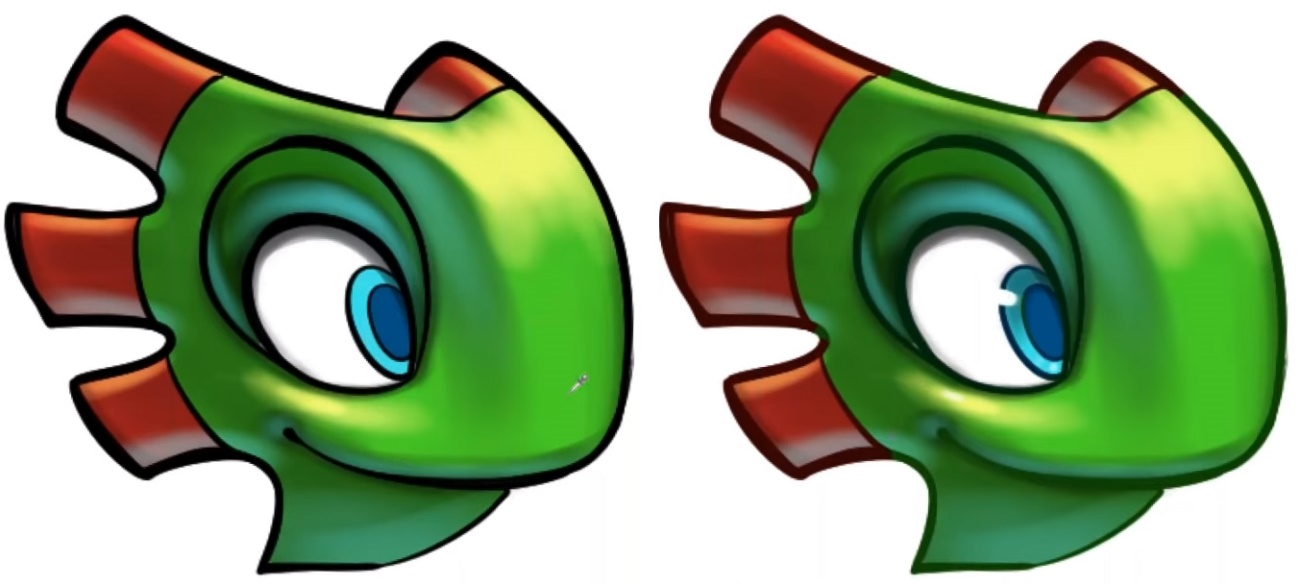
That'southward pretty much how it's done!
You lot can apply the aforementioned technique to the groundwork as well: putting flats in, adding shadows and ambient occlusion, and calculation highlights.
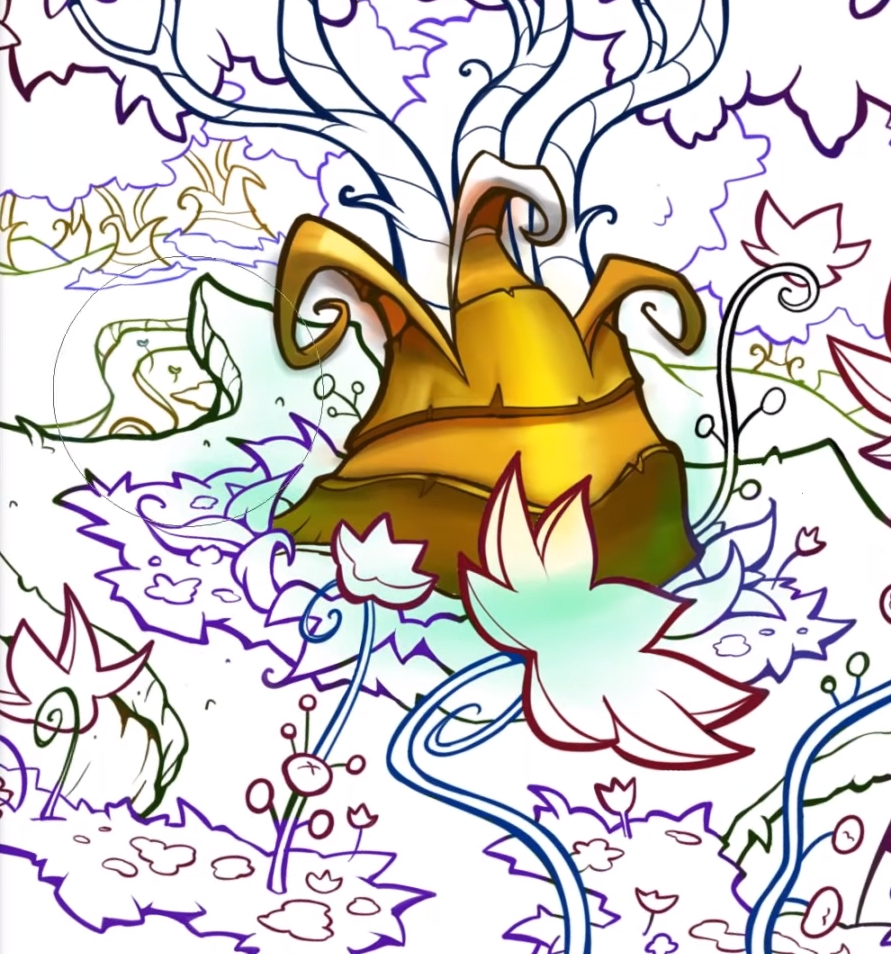
Watch David's webinar for the total live cartoon!
Source: https://www.clipstudio.net/how-to-draw/archives/161828

Post a Comment for "How to Add Highlights to Art Digital Clip Studio Paint"